VIA Technologies, Inc. designs and manufactures a slew of embedded products including ultra low votage CPUs, embedded motherboards and barebone systems. They also, of course, design the Mini-ITX, Nano-ITX, Pico-ITX and Em-ITX platforms that are widely used in the embedded market. This blog feed follows news and reviews on VIA embedded products, especially those available in Australia.
Wednesday, February 23, 2011
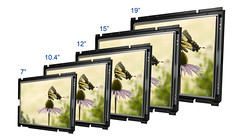
Vision Intelligence Displays launched by VIA Embedded
Tuesday, February 22, 2011
VIA shows of HD digital signage at Las Vegas Expo
At the Expo, will will also be showing off both ARM and X86 based products for digital signage.
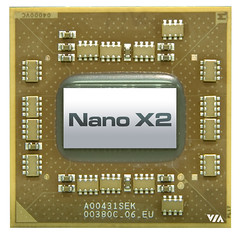
"A range of VIA EPIA Mini-ITX boards with additional graphical and HD multimedia muscle will be demonstrated, including boards based on the multimedia-focused VIA VX900 chipset and the latest VIA Nano X2 dual core processor.
Complete digital solutions systems will be shown, including the robust VIA VIPRO panel series which combine a comprehensive range of features in a high quality, industrial-grade LCD panel. Other signage systems include and the VIA VMPC, a fanless, ultra thin system featuring an industry-first thru-chassis VESA mounting design, turning any standard display into a digital signage device in moments. "
The show runs until tomorrow, 24th February. Source: Press Release.
Tuesday, January 4, 2011
VIA Nano goes 40 nanometer and multi-cores
Monday, January 3, 2011
VIA appoints Simmtronics as distributor/manufacturer
This is therefore much more than a simple distributor agreement, with Simmtronics actually manufacturing VIA products in India, rather than shipping completed systems into the country.
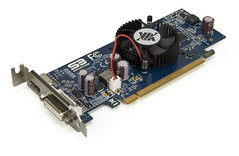
VIA leverages S3 to release graphics card for embedded market
VIA's acquisition of S3 Graphics eleven years ago has seen many S3 Graphics designs incorporated into integrated graphics solutions in VIA chipsets and digital media processors. Whilst VIA has included the Chrome series in EPIA boards before, they have now launched a new PCI Express graphics card, which they claim is the first low profile discrete card ever designed for the embedded industry.
The features of the card include:
PCIe 2.0 Bus Interface
512MB DDR3
Low profile form factor
Dual-Link DVI and HDMI (with HDCP)
Fully programmable DirectX 10.1 Unified Shader Core
OpenGL 3.1 + OpenGL ES 2.0
GPGPU on OpenCL 1.0
H.264 and VC-1 support for Blu-Ray
Support for resolutions up to 2560x1600
1080p/1080i/720p HD-decode
Steroscopic 3D capable
Dual display support
The embedded industry is increasingly finding that customers want better display output and more complex multi-monitor support. The eH1 card aims to fulfill this need.
Wednesday, December 15, 2010
VIA announces new Pico-ITX with HD and 2 Mini-PCIe
Latest VIA Nano processor - check, it has a 1.2GHz Nano E-Series
HD 1080p - check, the VIA VX900 delivers this
Expansion options - check, 2 mini-PCIe ports provides massive amounts of options
HD audio - check, including SPDIF, 6 channel and DTS capable
Advanced memory support - check, DDR3 supported
Networking - check, gigabit Ethernet, plus you've got those mini-PCIe for any other type of wireless connectivity you need
Ports - check, there's 1 channel LVDS display support, an additional 5 x USB 2.0 ports, an LPC connector, SMBus connector, PS/2 support, audio jacks, LVDS, 4 pairs of DIO and two UART ports
Wednesday, December 1, 2010
VIA's dual core design angle
"Unlike most current multi-core processors, VIA has gone down a somewhat older route by sticking two CPU dies next to each other, this means that there's no shared cache and no direct data exchange between the two CPU cores and all core to core communication takes place over the system bus. It's worth remembering that this is very much set to be an Atom competitor and despite the basic dual core design, it should still be more than capable of keeping up with the Atom processors thanks to its superior out-of-order design compared to the Atom's in-order design."
Like many manufacturer-watchers, Semiaccurate.com are eagerly awaiting the VIA nano DC's availability in early 2011 ... not far off now!